
Executive Summary
Devils on the Moon Pinball highlights the technical ingenuity required to implement a realistic physics simulation on the Playdate, a highly constrained hardware platform. Coupled with inventive gameplay and thematic depth, the game successfully redefines portable pinball gaming.
Technical Breakdown
Physics Simulation on Playdate
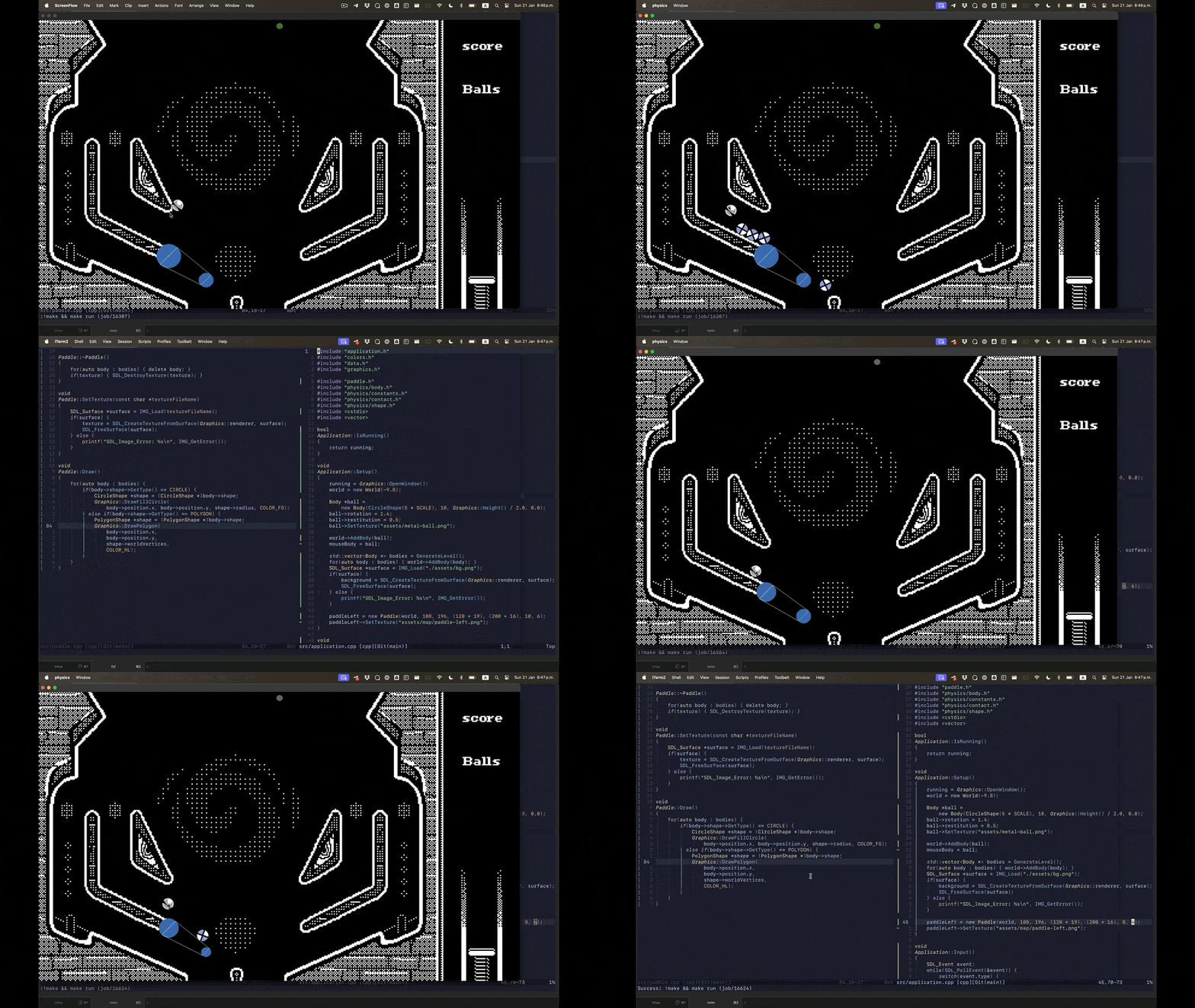
The challenge faced by Amano was substantial: implement realistic pinball physics on the Playdate, a platform with limited computing power and a 1-bit monochrome display. They achieved this by optimizing collision detection routines and rendering synchronization, ensuring smooth feedback without detectable latency or performance degradation.
Key Techniques:
// Example pseudo-code for collision optimization function handleCollision(ball, object) { if (ball.velocity.magnitude > threshold) { applyForce(ball, object); } else { skipForceApplication(); } }
This kind of threshold-based calculation ensures that computational cycles aren't wasted on negligible interactions, preserving overall frame rates.
Dynamic Gameplay Mechanics
One of the most innovative features is the evolving pinball table. The board adapts dynamically based on player performance, unlocking tailored challenges and additional "devils" to interact with. This mechanic relies on procedural generation for animating changes without manual, resource-intensive programming.
Animations and Interactivity
"Devils" on the board utilize sprite-based animations synced to ball interactions and score triggers, enhancing gameplay feedback. The grimoire—a tracking system for captured devils—uses persistently stored data to reward player progress.
Constraints and Optimizations
Given the hardware limits of the Playdate, Amano leveraged:
Memory-efficient algorithms for game state storage and rendering.
Low-latency physics calculations tailored to the platform’s reduced refresh rates.
Adaptive update mechanisms to prioritize responsiveness in gameplay-critical areas.
Architecture Notes
The system design incorporates a lightweight physics layer coupled with sprite-based rendering pipelines. Developers avoided computational bottlenecks by precomputing frequent operations and dynamically offloading non-interactive elements into background threads (where feasible). Integration opportunities with Steam next year suggest scalability in porting this optimized codebase to more resource-rich platforms.
Why It Matters
Devils on the Moon Pinball exemplifies how even constrained hardware can deliver impressive physics simulations and engaging gameplay when paired with thoughtful engineering. It highlights the Playdate’s potential for creative game development, inspiring engineering teams to innovate within tight system limitations.
Open Questions
What specific optimization algorithms were used to balance physics precision and performance?
Could the game’s procedural mechanics scale effectively to other handhelds or consoles?
What constraints will developers face when porting this gameplay experience to Steam next year?
Community Discussion
Hacker News discussion
Reddit thread
Source & Attribution
Original article: Demons and pinball are a perfect match
Publisher: The Verge AI
This analysis was prepared by NowBind AI from the original article and links back to the primary source.