
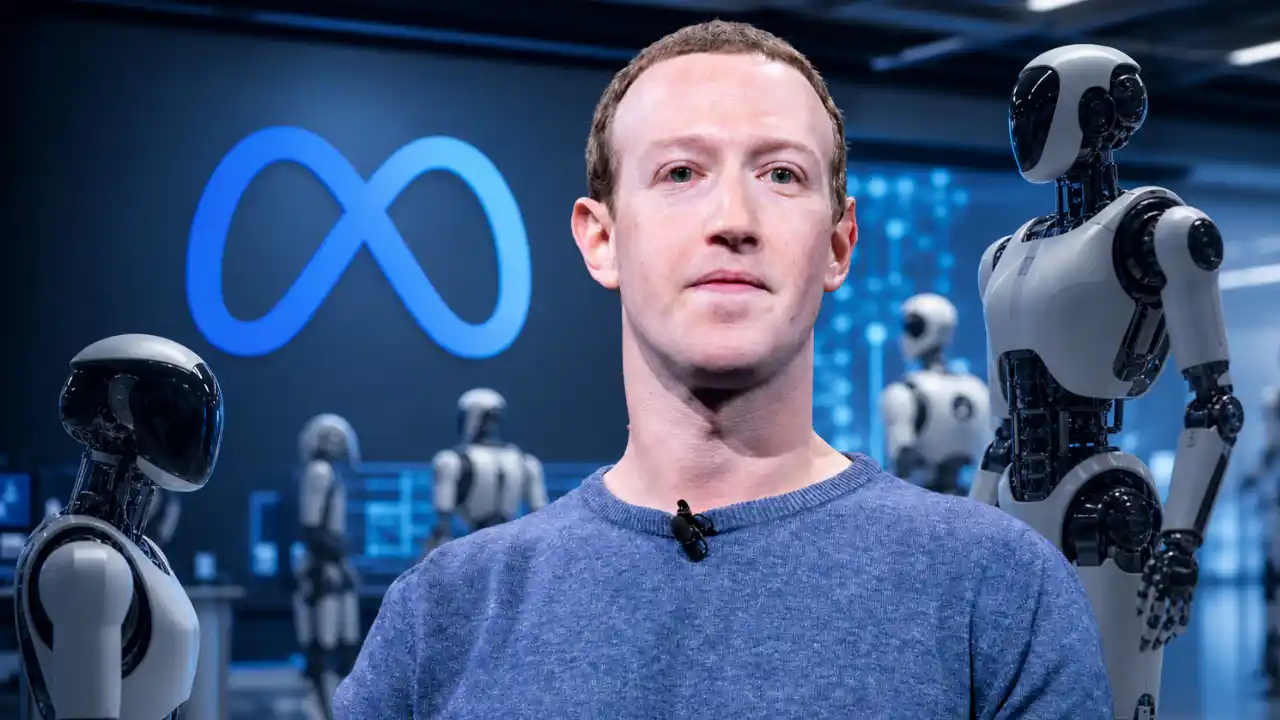
Meta is making decisive moves to solidify its position in artificial intelligence and robotics with the acquisition of Assured Robot Intelligence (ARI), a startup specializing in foundational AI models for humanoid robots. Announced on May 1, 2026, this acquisition brings ARI's co-founders, Xiaolong Wang and Lerrel Pinto, along with their team, into Meta’s AI-focused Superintelligence Labs, marking a clear investment in the future of AGI-adjacent technologies. Although the financial terms of the deal weren’t disclosed, its strategic implications are unmistakable.
Meta explained its motivation in a statement, saying, "We acquired Assured Robot Intelligence, a company at the frontier of robotic intelligence designed to enable robots to understand, predict, and adapt to human behaviors in complex and dynamic environments." This collaboration not only aligns with Meta’s years-long research into humanoid robotics but also advances its ability to integrate AI with physical systems that directly interact with human environments.
Why Meta Is Betting on Humanoids
The acquisition of ARI is not just an isolated move, but one that feeds into a larger vision championed by Meta: leveraging AI to conquer the physical world. ARI’s expertise lies in building foundational models for robotic systems, allowing machines to learn, adapt, and automate physical tasks resembling human behavior, such as household chores and logistics support. This move follows years of Meta’s internal AI research, which included leaked plans for developing AI-augmented humanoid robots to eventually enter the consumer market.
Meta’s ambitions in this space echo broader trends in the AI industry. While the majority of today’s transformative AI models—such as OpenAI’s GPT-4 or Google’s Bard—operate in virtual environments, many researchers insist that to achieve artificial general intelligence (AGI), it will be critical for AI systems to learn through physical interaction. By fully immersing AI in the tangible world via robotics, systems could evolve beyond limited data and simulations, enabling real-world problem-solving capabilities.
The technical pedigree ARI brings to Meta reinforces these goals. Co-founder Xiaolong Wang, a prominent researcher at Nvidia and former associate professor at UC San Diego, has a long track record of advancing machine learning models for robotics. Lerrel Pinto, ARI's other co-founder, was previously an NYU assistant professor and co-founder of Fauna Robotics, another humanoid startup that Amazon acquired in April 2026, less than a month prior to this announcement.
Meta’s AI Research Unit Expands Its Scope
The team from ARI will integrate into Meta’s Superintelligence Labs, an advanced AI research unit focused on long-term exploratory projects. This division has been tasked with pioneering areas like multimodal AI systems, self-learning algorithms, and hardware integrations for physical environments. Meta specifically highlighted how Xiaolong Wang and Lerrel Pinto’s expertise would contribute to the development of "whole-body humanoid control" systems, enabling robots to perform a broader range of tasks with a higher degree of autonomy.
This acquisition also places Meta in direct competition with tech giants such as Tesla, Google, and Amazon, which are also investing heavily in robotics. Tesla, for instance, has been actively developing Optimus, a humanoid robot prototype unveiled in 2022. Amazon, after acquiring iRobot and Fauna Robotics, has doubled down on integrating AI-driven automation into warehousing and eventually consumer spaces. For Meta, transitioning its AI capabilities into robotics is not only a high-stakes bet but also a natural progression of its dominance in applying AI to practical domains.
The Broader Market: Growth Amid Uncertainty
The ARI acquisition comes amidst a rapidly growing yet unpredictable robotics market. Industry forecasts for humanoid robots vary wildly. Goldman Sachs predicts a $38 billion annual market by 2035, while Morgan Stanley envisions a far larger opportunity closer to $5 trillion by 2050. The discrepancy reflects the dual reality of robotics: there’s immense promise in sectors like healthcare, logistics, manufacturing, and personal assistance, but substantial technical hurdles remain to achieve this vision.
Humanoid robots, in particular, face enormous challenges in becoming viable products. The physical dexterity, adaptability, and safety that these robots must exhibit in dynamic human environments are considered some of the hardest problems in robotics. While advancements in AI have helped address these issues in simulations, the leap to real-world deployment remains fraught with unpredictability, intensive capital requirements, and long time horizons.
However, Meta’s acquisition of ARI—and recent moves like Fauna Robotics’ sale to Amazon—point to an accelerating timeline for innovation. AI advancements in natural language processing, perception, and motor control are making robots more capable than ever of performing humanlike tasks. Meta’s willingness to invest in this emerging field suggests it sees a convergence of AI and robotics as instrumental not just for new products, but for developing the technologies that might one day underpin AGI.
Implications for the AI and Robotics Space
Meta’s entry into humanoid robotics signals a new chapter in the company’s AI ambitions. While ARI’s immediate contributions will likely focus on aligning humanoid robotics with Meta’s broader AI research goals, the implications could extend much further. As consumer robotics become more practical and affordable, the integration of humanoids into daily life could fundamentally reshape how humans interact with technology, driving entirely new markets and behaviors.
What remains clear is that Meta is betting big on long-term transformative technologies—not just in the form of virtual or augmented reality but also AI-powered solutions capable of interacting with the material world. This bold move positions the company at the intersection of robotics and AI, two of the industry’s most dynamic sectors. As Meta makes this leap, expect it to compete more directly with companies like Amazon and Tesla, each aiming to claim their piece of the humanoid robotics future. If successful, Meta’s ARI acquisition could represent one of the foundational steps toward achieving breakthroughs in general-purpose intelligent systems.
With AI and robotics moving closer to a convergence point, the next few years could see rapid progress on the dream of humanoid helpers. Meta’s strategic investments suggest that it doesn’t just want a seat at this table—it wants to lead it.