
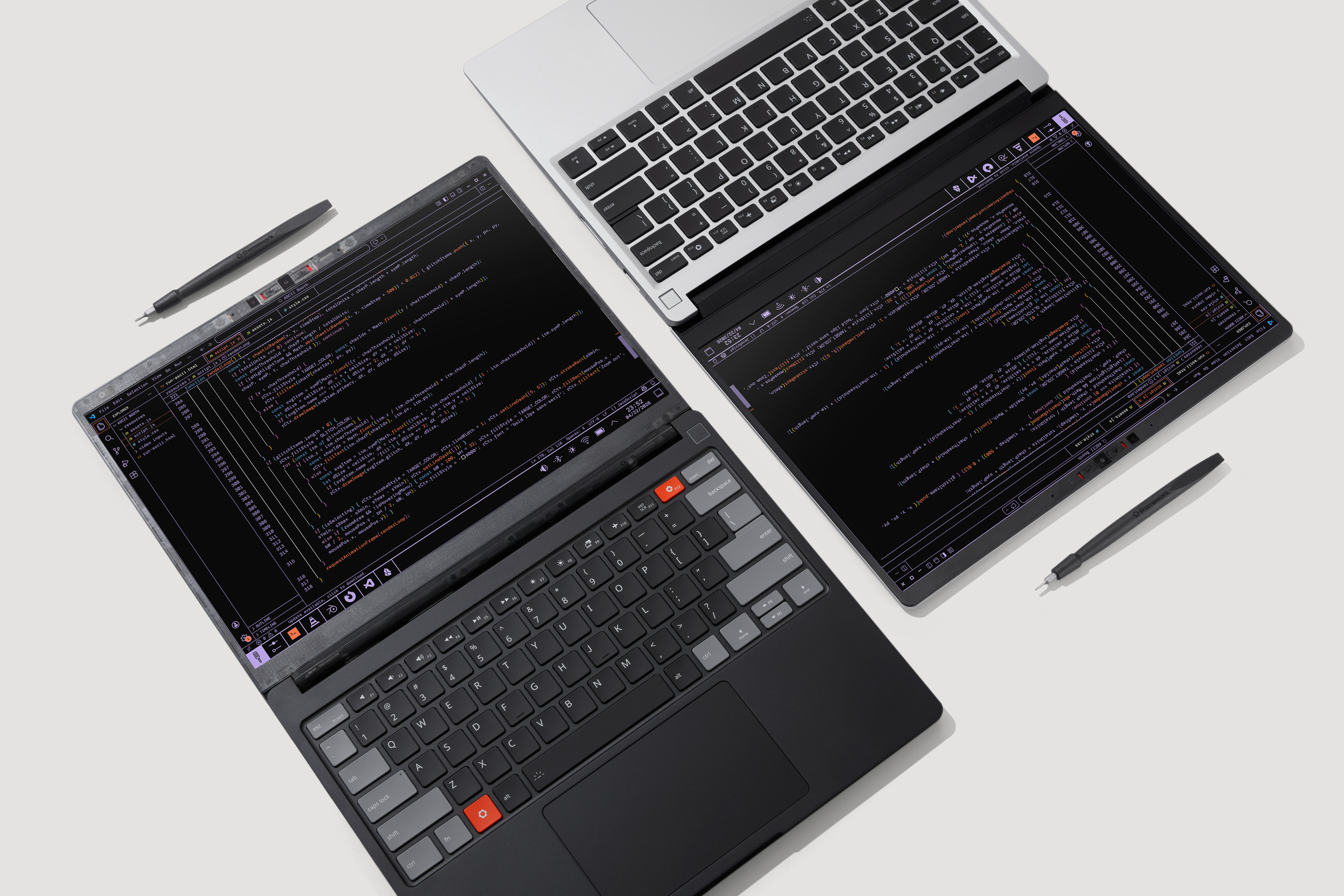
Framework, the company that has steadily built a reputation for modular and repairable laptops, stepped up its game today with the announcement of the Framework Laptop 13 Pro. Unveiled during its April 2026 event in San Francisco, CEO Nirav Patel introduced the company’s first laptop fully machined from aluminum, describing it as “the MacBook Pro for Linux users.” With a combination of high-end materials, enhanced modularity, and expanded capabilities, the Laptop 13 Pro represents the company’s boldest attempt yet to compete with major players while staying true to its ethos of sustainability and user freedom.
Framework Laptop 13 Pro: Apple Design Meets Linux Customization
The headlining act from Framework’s event was undoubtedly the new Laptop 13 Pro. Moving away from the more utilitarian look of its predecessors, the Laptop 13 Pro embraces a sleek, machined aluminum chassis that elevates its premium feel. Patel explicitly pitched it as a device that could tempt Linux users who admire the build quality of Apple’s MacBook Pro but want open hardware and software flexibility.
Under the hood, the Framework Laptop 13 Pro gets a significant hardware upgrade. It features Intel’s latest Core Ultra 3 processor alongside customizable LPDDR5 memory and an advanced 22 percent larger battery. Thermal enhancements have been made as well, addressing long-standing critiques of Framework laptops’ battery life. According to Patel, the new model delivers 20 hours of 4K Netflix playback—an impressive claim that edges out Apple's 2025 M5 MacBook Pro’s average streaming endurance. Moreover, the machine’s display now boasts a custom variable refresh rate (30Hz-120Hz) and uses LPCAMM2 memory compression technology, a first in this category. While Linux users will find it more tailored to their needs, the device's modularity ensures it remains accessible to any enthusiast eager to modify or upgrade.
Modular Computing, Now with External GPU Power
Framework also spotlighted its growing ecosystem surrounding modularity and customization. A significant announcement came in the form of its new OCuLink Dev Kit, which enables users to transform its Laptop 16 GPU modules into fully functional external graphics systems. Unlike typical consumer-friendly Thunderbolt eGPU systems, the OCuLink-based setup transmits data through PCIe lanes, delivering eight lanes of bandwidth directly to external GPUs or other PCIe cards.
Patel was upfront during the keynote about this being a niche enthusiast solution, stating it is “for that enthusiast or power user.” It's an interesting deviation from the typical plug-and-play standard, signaling Framework's support for a thriving DIY community. This external GPU solution builds on the company’s earlier innovation in modular graphics for its laptops. Now, Framework users will have powerful tools to turn their modular laptops into even more versatile desktop-grade workstations.
Beyond the Laptop: New Accessories and Refinements
Framework also introduced a selection of new accessories, further enhancing its hardware ecosystem. One standout is the introduction of the company’s first-ever laptop sleeve, which is made from a lightweight yet durable Tyvek material. While Tyvek is often used in industrial applications, its application here includes padded compartments for tools like Framework’s Expansion Cards, a screwdriver, and, of course, the Laptop 13 Pro itself. Priced competitively and available in two colors—silver and black—it’s a sign Framework is considering user needs beyond just the laptop itself.
Other hardware upgrades included refinements to the more modular Framework Laptop 16. Patel acknowledged complaints about the aesthetic and tactile issues posed by uneven keyboard spacers in the modular design. In response, the new framework introduces one-piece keyboard and touchpad decks, which are reportedly haptic-based for a better user experience and feel sturdier than prior options.
Taking on Logitech with a Better Couch Keyboard
One of the more unexpected announcements of the event was Framework’s venture into the “couch keyboard” category—a wireless keyboard with an integrated touchpad designed for living room use. The pitch? A direct challenge to Logitech’s widely-used but widely criticized K400 wireless keyboard. “Everybody’s got the same keyboard, and nobody likes that keyboard,” Patel quipped. Framework’s yet-unnamed product promises improved ergonomics, better build quality, and potentially more consistent wireless performance.
It’s no surprise that Logitech’s K400 inspired this move, as it has long been a go-to option for consumers looking for low-cost wireless keyboards. Framework’s entry in this space, however, may appeal to users who are willing to pay more for a feature set that aligns better with premium living room setups.
The Bigger Vision: Own Your Hardware, Own Your Future
As Framework continues to challenge the status quo of disposable, proprietary electronics, Patel reaffirmed the company’s philosophy during the event: “The industry wants you to own nothing and be happy. We want you to own everything and be free.” This bold vision continues to resonate with the Framework community, which deeply values the company’s dedication to modularity and repairability at a time when many technology manufacturers are moving in the opposite direction.
The sharp tone was underscored by the event’s emphasis on hardware freedom—from upgraded modular laptops to accessories designed to last and adapt over time. Among repairability-focused manufacturers, Framework has steadily carved a niche for itself, but this event indicated it is no longer content with being merely a unique alternative. With the Laptop 13 Pro’s bold design play and the expansion of its peripheral ecosystem, Framework is clearly eyeing more mainstream audiences.
Implications for Framework’s Future—and the Industry At Large
The Framework Laptop 13 Pro positions the company squarely in direct competition with high-end laptop makers, offering a premium-feeling product without compromising on the core principles of modularity and repairability. With forward-thinking innovations like OCuLink eGPUs, haptic keyboard enhancements, and customization-ready accessories, Framework is signaling a maturation of its platform from enthusiast-first to an ecosystem capable of scaling into broader consumer appeal.
If successful, this path could inspire other companies to reconsider rigid hardware lock-ins or waste-prone design cycles. Framework is showing it’s possible to blend modular, repair-friendly designs with cutting-edge specs and aesthetics—a combination that has eluded many others. Whether the market is ready to embrace this alternative en masse will be the defining question for Framework’s next chapter.