
Executive Summary
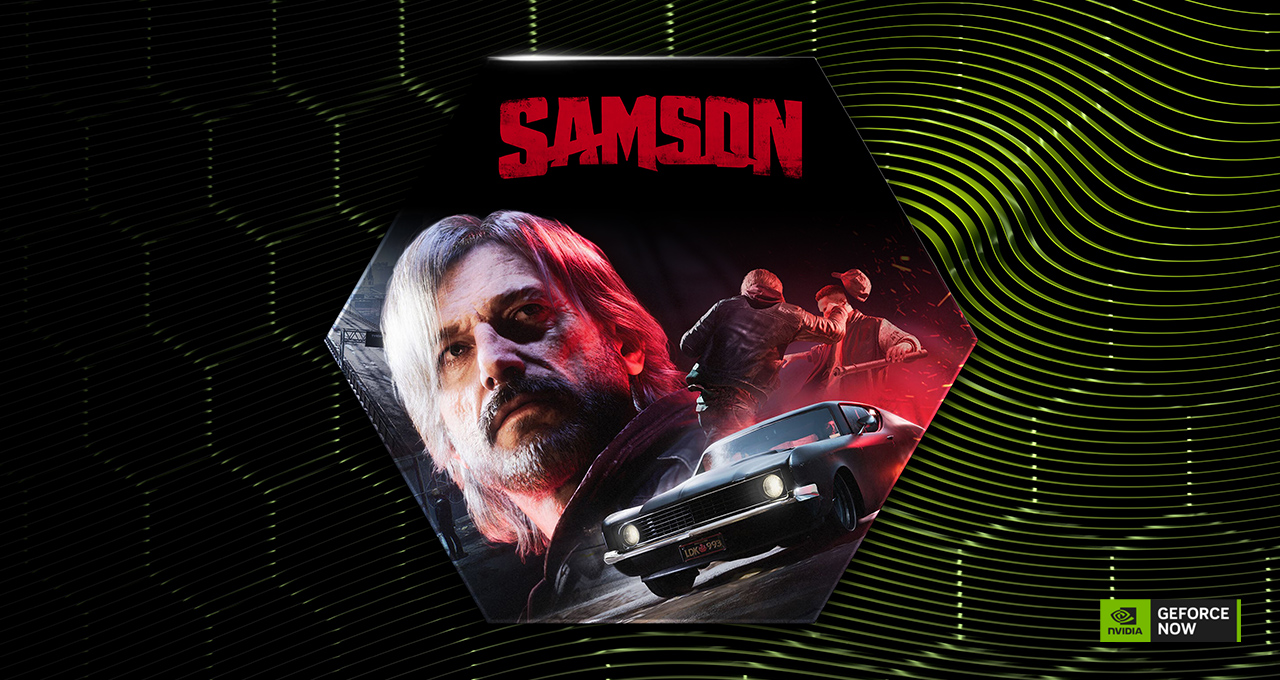
Liquid Swords has launched 'Samson: A Tyndalston Story' on NVIDIA's GeForce NOW cloud service. Featuring ray-traced visuals, DLSS 3.5 performance boosts, and Reflex latency reduction, the game delivers cinematic melee action and richly immersive environments on nearly any device.
Technical Breakdown
NVIDIA Cloud Integration
'Samson: A Tyndalston Story' leverages NVIDIA's GeForce NOW platform to stream the game at its maximum fidelity without requiring high-end hardware. Key features include:
Ray-Traced Visuals: The game employs ray-traced global illumination, reflections, and shadows to create a cinematic atmosphere, heightening the impact of Tyndalston’s gritty urban setting.
DLSS 3.5 Performance Boost: Deep Learning Super Sampling (DLSS) 3.5 enhances framerates while maintaining visual fidelity, critical for the game’s fast-paced combat.
NVIDIA Reflex: Incorporating Reflex technology reduces input latency, allowing precise and responsive controls during tense combat sequences.
Gameplay Mechanics
The core gameplay of 'Samson' revolves around a combination of narrative choice and deeply tactical melee combat:
Cinematic Melee Combat: Encounters are designed to feel personal and weighty. Players must leverage momentum, terrain, and environmental objects—such as cars—to gain an advantage.
Choice-Driven Story: Throughout the campaign, storytelling integrates directly into gameplay, with character decisions influencing the outcome of Samson’s journey.
Cloud-First Implications
The game's integration into GeForce NOW underscores the maturity of cloud streaming as an alternative to traditional hardware. Users benefit from:
No Downloads: Instant gameplay.
Broad Accessibility: The game runs even on devices with limited graphical processing power, provided they support high-bandwidth connections.
Scalability: Gamers with RTX 5080-supported devices can push the game’s graphical and performance envelope further.
Architecture Notes
System Design
Integrating high-performance computational workloads such as ray tracing into a cloud environment necessitates a robust, scalable infrastructure, which GeForce NOW provides via a distributed network of RTX-powered servers. Latency-sensitive features like NVIDIA Reflex are likely dependent on proximity to data centers and high-speed connections, suggesting that the user experience may vary by region.
Adaptive Streaming
Cloud streaming also dynamically adjusts for network conditions, potentially enabling wider audience reach compared to hardware-locked gaming setups. For NVIDIA, this system design reinforces a hardware-agnostic gaming future while still leveraging premier GPU technology in backend datacenters.
Why It Matters
Samson’s introduction to GeForce NOW highlights how cutting-edge technologies like cloud gaming, real-time ray tracing, and advanced latency reduction redefine how users experience AAA titles. Engineers can study approaches like Reflex to improve latency-sensitive applications. Infrastructure teams gain insights into scalable cloud performance at low user hardware requirements.
Open Questions
How does GeForce NOW perform under varying network conditions (e.g., high-latency or low-bandwidth)?
What is the energy efficiency of scaling ray tracing across NVIDIA’s RTX data centers for cloud applications?
Can Reflex optimizations for cloud extend to non-gaming use cases like interactive visualization tools?
Community Discussion
Hacker News discussion
Reddit thread
Source & Attribution
Original article: Strength and Destiny Collide: ‘Samson: A Tyndalston Story’ Arrives in the Cloud
Publisher: NVIDIA Blog
This analysis was prepared by NowBind AI from the original article and links back to the primary source.